Claude Cowork Just Stopped Forgetting
Projects give Claude persistent state. Here's what that actually changes for solo founders.

Most people will look at Projects in Cowork and see folders.
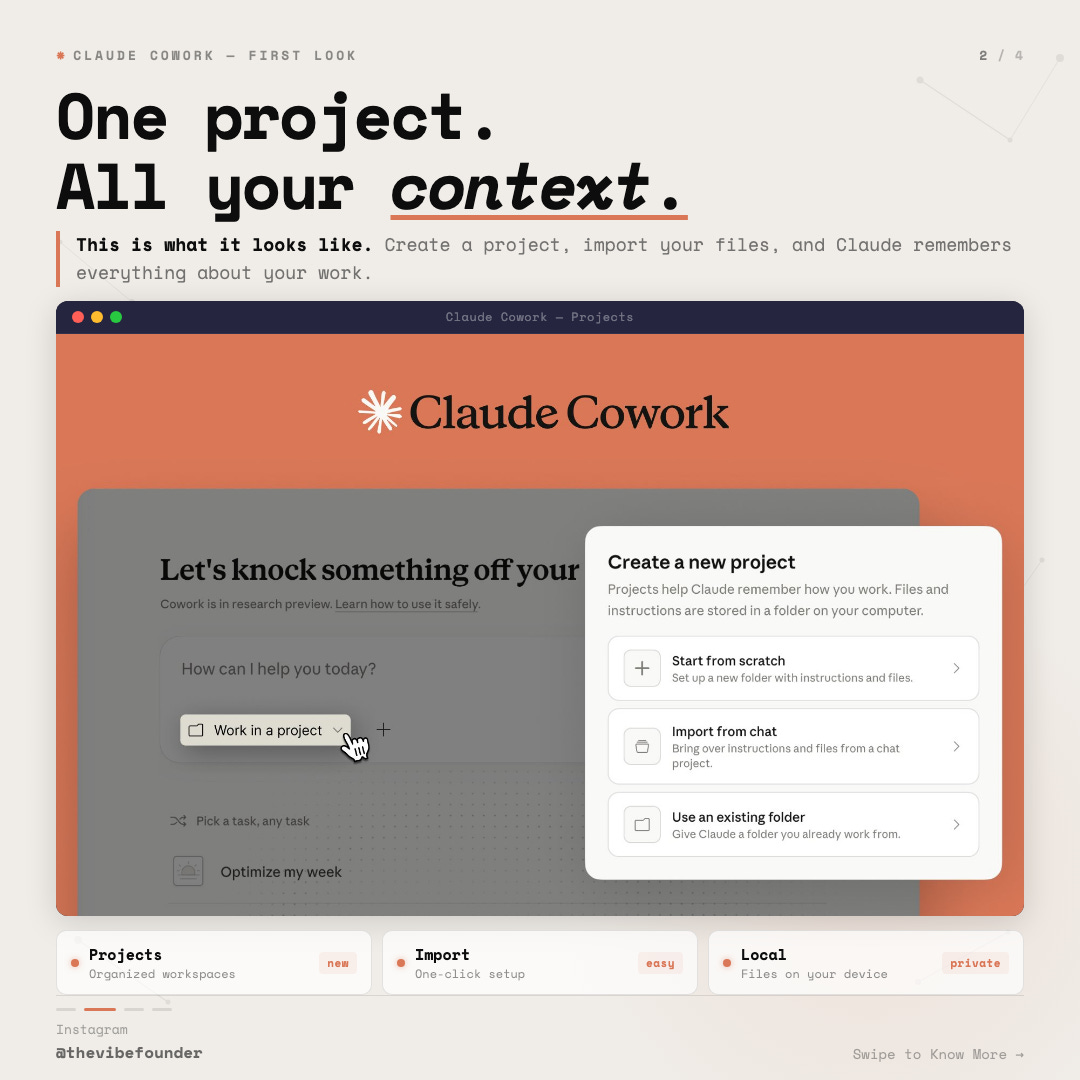
A way to organize tasks. A cleaner sidebar. A little more structure.
That’s not what this is.
Anthropic just gave Claude Cowork something it was missing: persistent state.
Not just memory in the abstract. Not just another place to save files. A durable workspace where related work can accumulate context, instructions, scheduled tasks, and memory over time.
That matters more than it sounds.
Because the real problem with most AI workflows is not capability.
It’s reset.
You ask for help. You get output. You move on. Then you come back later and have to rebuild the whole frame again. What are we doing? What files matter? What rules should Claude follow? What happened last time?
That constant reconstitution is where a lot of useful AI work quietly dies.
Projects don’t make Claude smarter.
They make your work less disposable.
What Actually Shipped
Projects in Cowork let you group related tasks into separate workspaces that carry their own instructions, context, scheduled tasks, and project-scoped memory.
You create a project in one of three ways: start from scratch, import from an existing Claude chat project, or point it at a folder already on your machine. You give it a name, add instructions for how Claude should work inside that project, drop in files, and turn on memory.
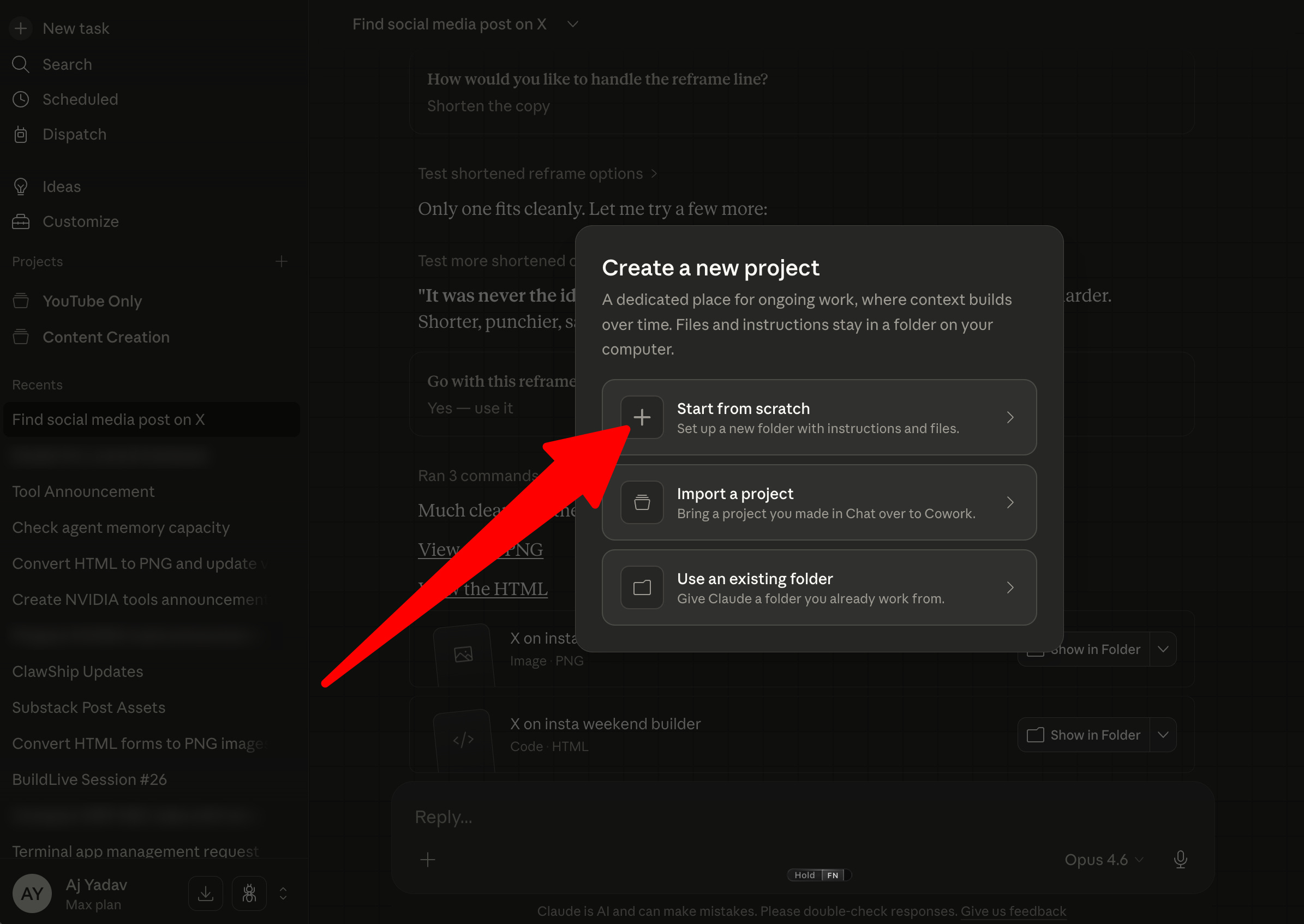
That is the whole setup. Takes about sixty seconds.
The deeper change: Claude now has somewhere to stay oriented.
Why This Matters More Than Another “Organization” Feature
People underestimate how much work depends on continuity.
Not raw intelligence. Not beautiful output. Continuity.
The weekly competitor brief is not hard. The ongoing product cleanup pass is not hard. The recurring research project is not hard.
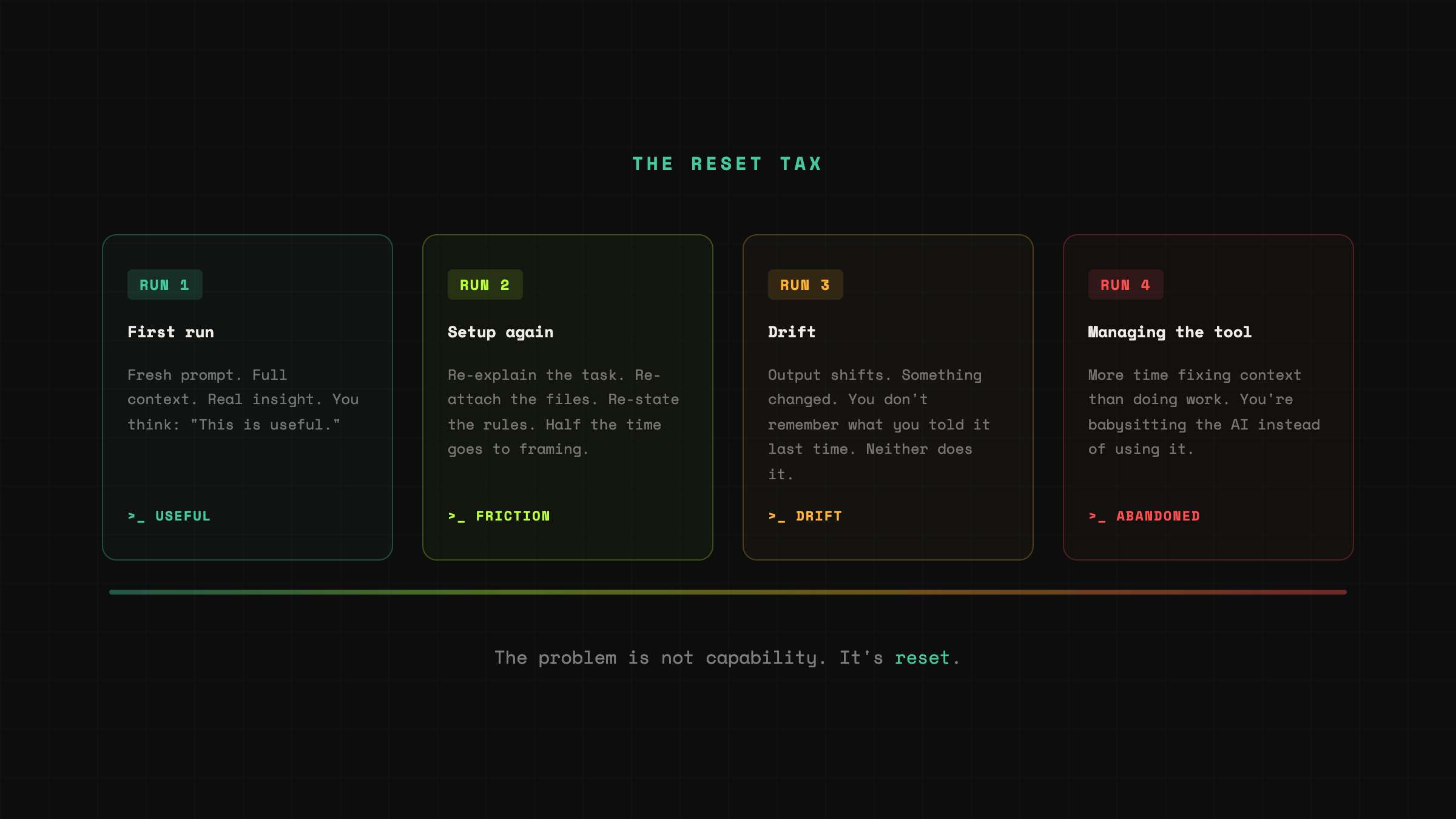
What’s hard is keeping all the context stable enough that the work improves instead of restarting every time.
That’s why most AI workflows feel impressive once and annoying after that. The first run is useful. The second run requires setup. The third run drifts. By the fourth run, you’re managing the tool instead of the work.
Projects are Anthropic’s answer to that specific problem. Instead of asking Claude to “remember” in a loose conversational sense, you give it a bounded operating environment: these files, these rules, this context, this memory, this recurring work.
That’s not chat. That’s closer to a standing desk, inbox, and playbook for a specific role.
The Real Upgrade Is Not Storage. It’s Memory With Boundaries.
This is the detail that matters.
Anthropic didn’t just add a place to dump files. They added project-scoped memory.
Claude remembers context from tasks you’ve run in a project and applies that context to future tasks in the same project — while keeping that memory completely separate from other projects.
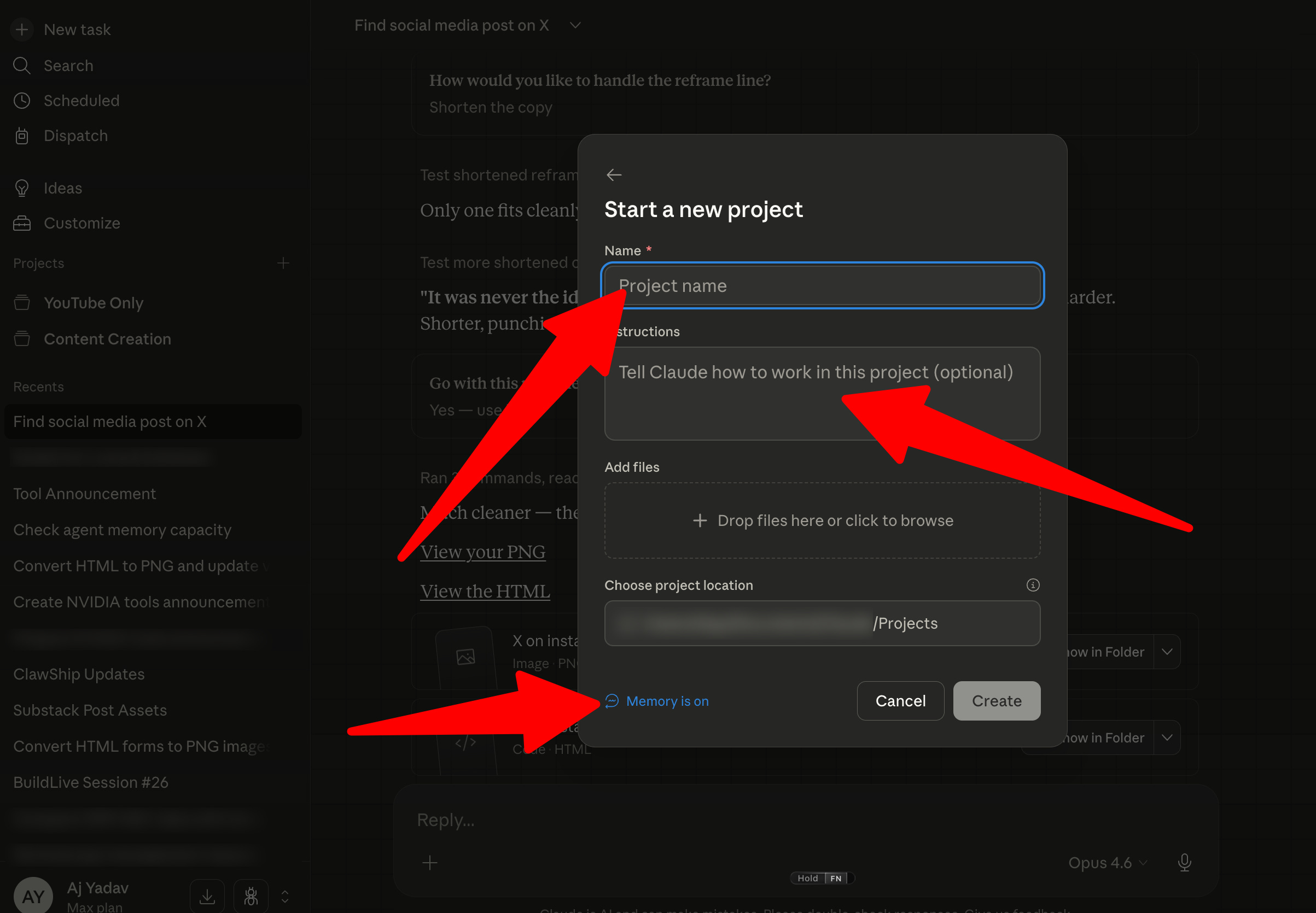
That scoping is the real design decision. AI systems get less useful when memory becomes mush. If everything bleeds into everything else, you don’t get continuity. You get contamination.
I noticed this immediately. My Content Creation project knows my brand voice, my formatting rules, my writing examples. My YouTube Only project knows my video structure, my upload cadence, my thumbnail preferences. Those two worlds don’t touch each other. The newsletter research doesn’t drift into my YouTube titles. The YouTube context doesn’t pollute my Substack drafts.
Scoped memory means you can let Claude build up familiarity with a lane of work without dragging every other lane into it. That’s a better architecture for actual work — because most useful work is role-based.
What I Actually Set Up
I have two projects running right now.
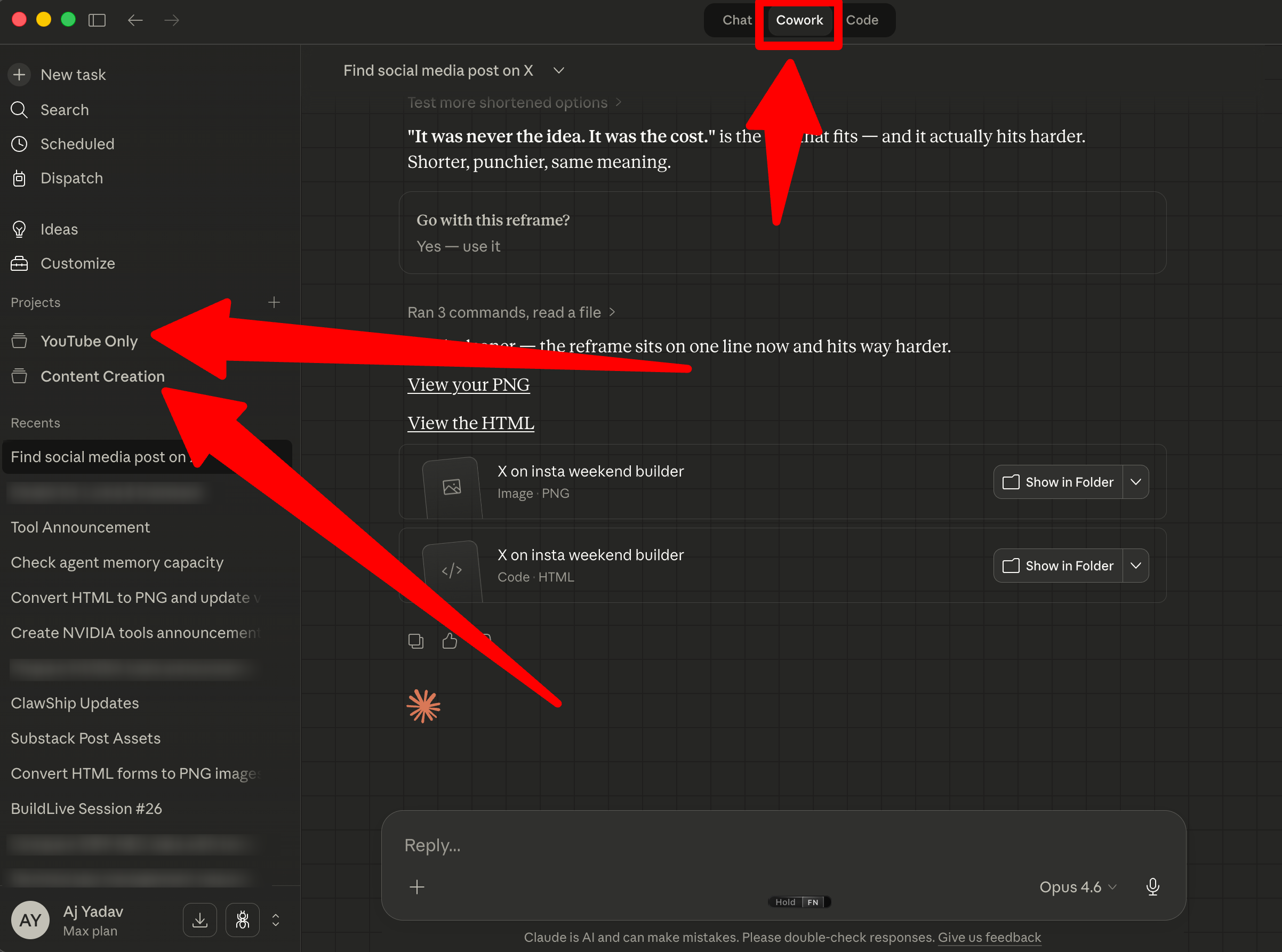
Content Creation is where all my Substack and Instagram work lives. I pointed it at my content folder, gave it my writing skill file, my brand guidelines, and instructions on how I want output formatted. Every time I run a task inside that project — find a social media post, create an X on Insta graphic, draft a newsletter section — Claude already knows what “good” looks like because it learned from the last ten runs.
The first week I used this, I asked Claude to find a tweet and reframe it for Instagram. It read my brand file, applied my voice rules, and output a design that matched my style without me explaining any of it. That used to take two paragraphs of setup every single time. Now it takes one line.
YouTube Only is scoped to video work. Script outlines, thumbnail concepts, topic research — all isolated from everything else. When I’m in that project, Claude thinks like a video producer. When I’m in Content Creation, it thinks like a newsletter writer. Same AI, different operating context.
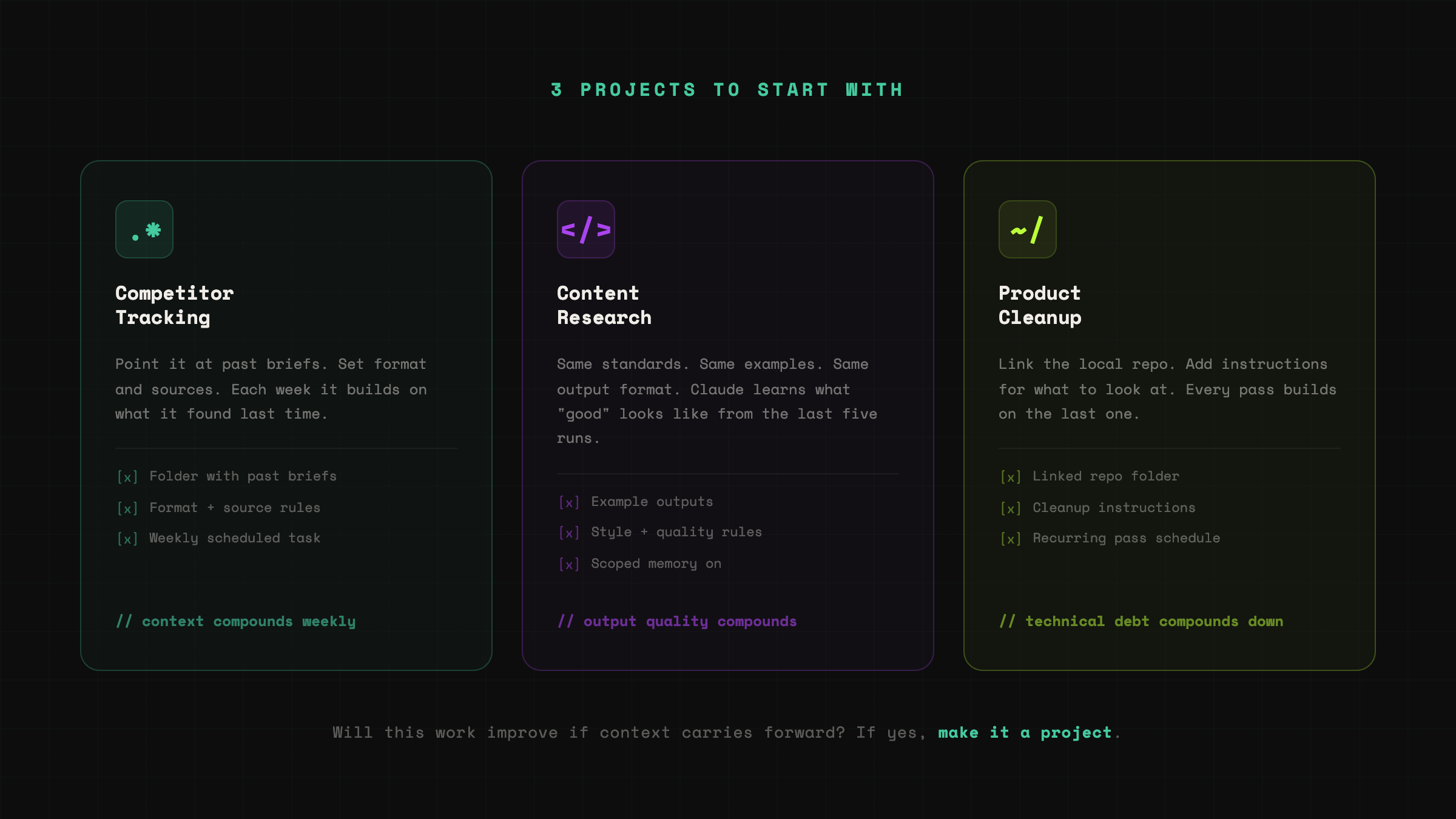
Neither of those setups is complicated. They’re boring. That’s the point. They get better when context accumulates — and that’s exactly the test for whether something belongs in a Cowork project or not.
Will this work improve if context carries forward?
If yes, make it a project.
If no, a one-off Cowork task is probably enough.
That’s the decision boundary.
What This Signals
This is not just Anthropic adding parity with “projects” as a category.
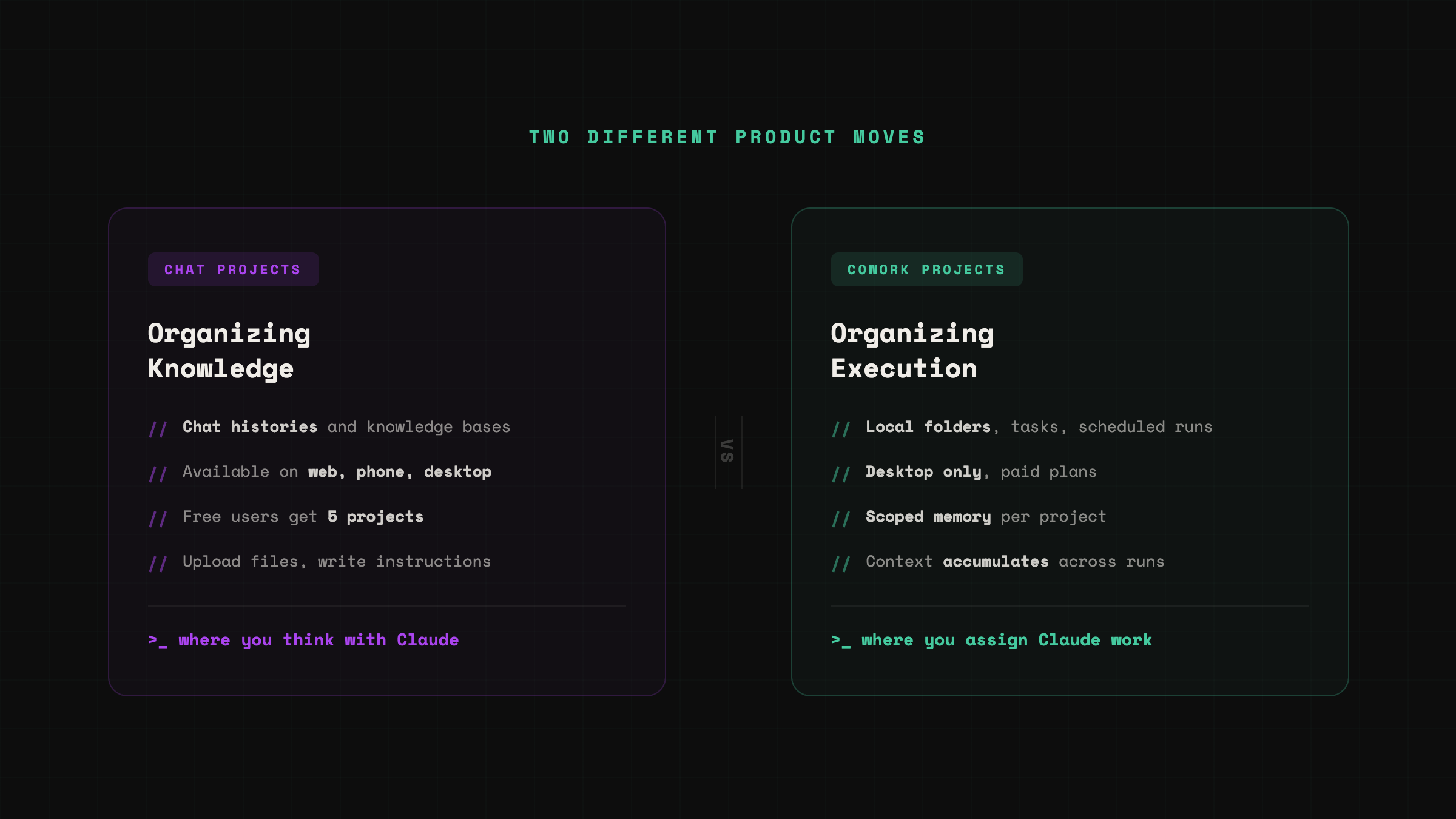
Claude already has chat Projects on the main product — available broadly, including to free users. Those are built around chat histories and knowledge bases.
Cowork Projects are different: local, task-centered, desktop-only workspaces designed for execution runs, not general chat organization.
That distinction matters.
Chat Projects are for organizing knowledge. Cowork Projects are for organizing execution.
That is a very different product move.
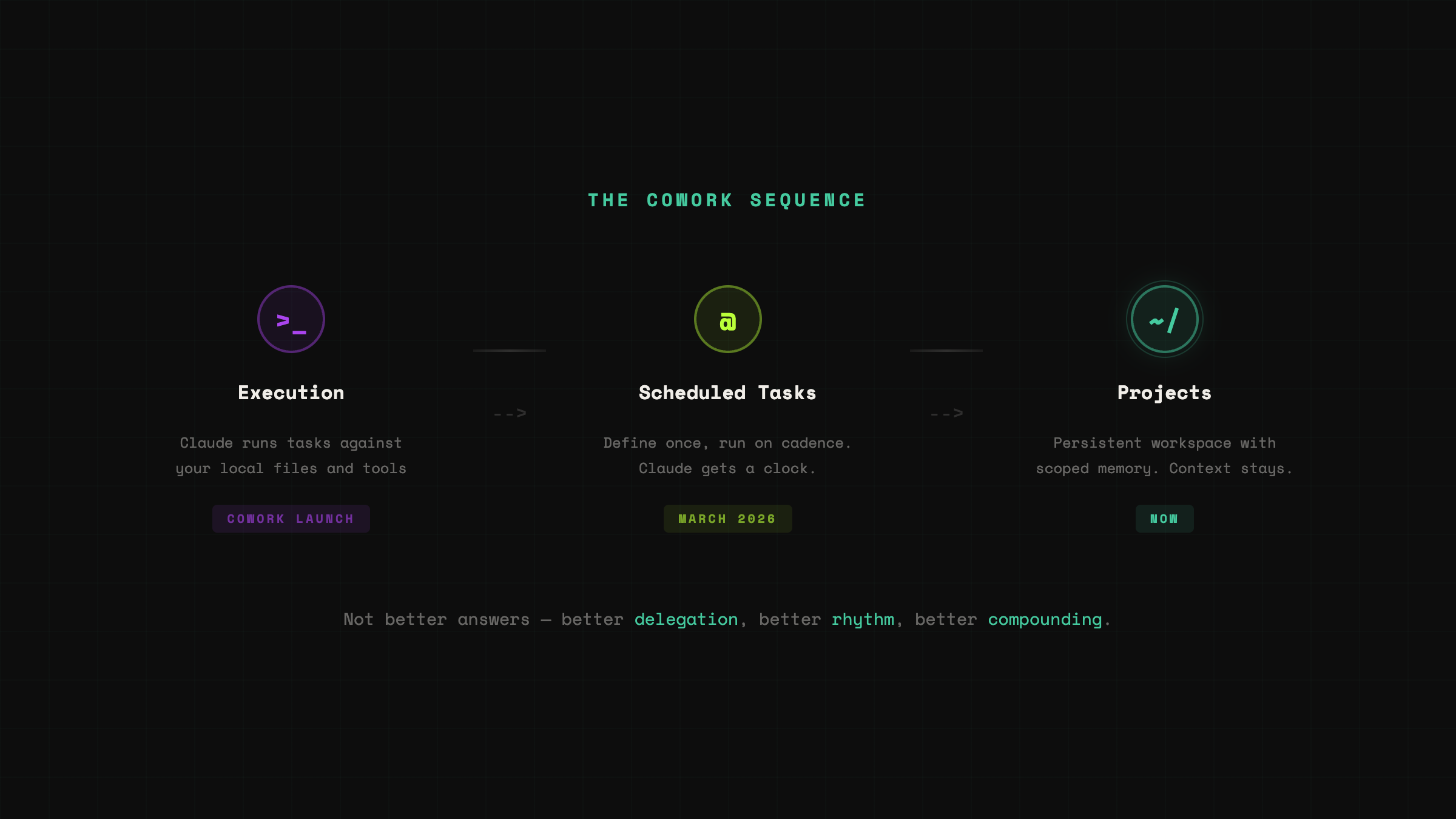
Zoom out, and you see a clear sequence. First Cowork got execution. Then it got scheduled tasks. Now it gets persistent project structure with memory.
Not better answers — better delegation, better rhythm, better compounding.
It suggests Anthropic sees Cowork becoming less like “Claude, but with tools” and more like a local operating layer for recurring work. I can feel that shift in how I use it.
The Limitations Matter Too
This is still early.
Projects require the latest Claude Desktop, are only available inside Cowork, and Cowork itself is still a research preview for paid plans on macOS and Windows. No cloud sync means this is not yet a cross-device system. No project sharing means it’s not yet a team collaboration layer.
This is not finished infrastructure. It’s local infrastructure. The one I feel most is no cloud sync — I work across two machines and right now these projects live on one of them.
But for solo founders, operators, and small teams — local plus persistent is already a massive upgrade over “start over every time.”
What This Changes for You
The biggest thing AI has changed for solo founders is not speed. It’s scope.
You can now operate with more continuity than your head alone can carry. And most founder bottlenecks are really state-management problems. Not “I don’t know what to do” — more like “I keep resetting the context every time I come back to this.”
Projects reduce that reset tax. They give recurring work a home. And once recurring work has a home, it becomes easier to schedule, easier to improve, and easier to hand off.
The Shift
If chat is where you think with Claude, and Cowork is where you assign Claude work — Projects are where that work finally starts to persist.
Claude Cowork didn’t just get folders. It got a place to stay oriented. A place to remember what matters in one lane without dragging the rest of your work into it.
Once AI has execution, memory, and a bounded workspace, you stop interacting with it like a chatbot. You start working with it like an operator.
Projects don’t make Claude smarter.
They make your work stop starting over.
Reply and tell me what project you’d set up first.
— Aj, @thevibefounder