Claude just redesigned what working with AI looks like
On April 14, Anthropic rebuilt Claude Code on desktop and launched Routines on the same day. It looks like a UI refresh. It is really a bet on a new shape of work.

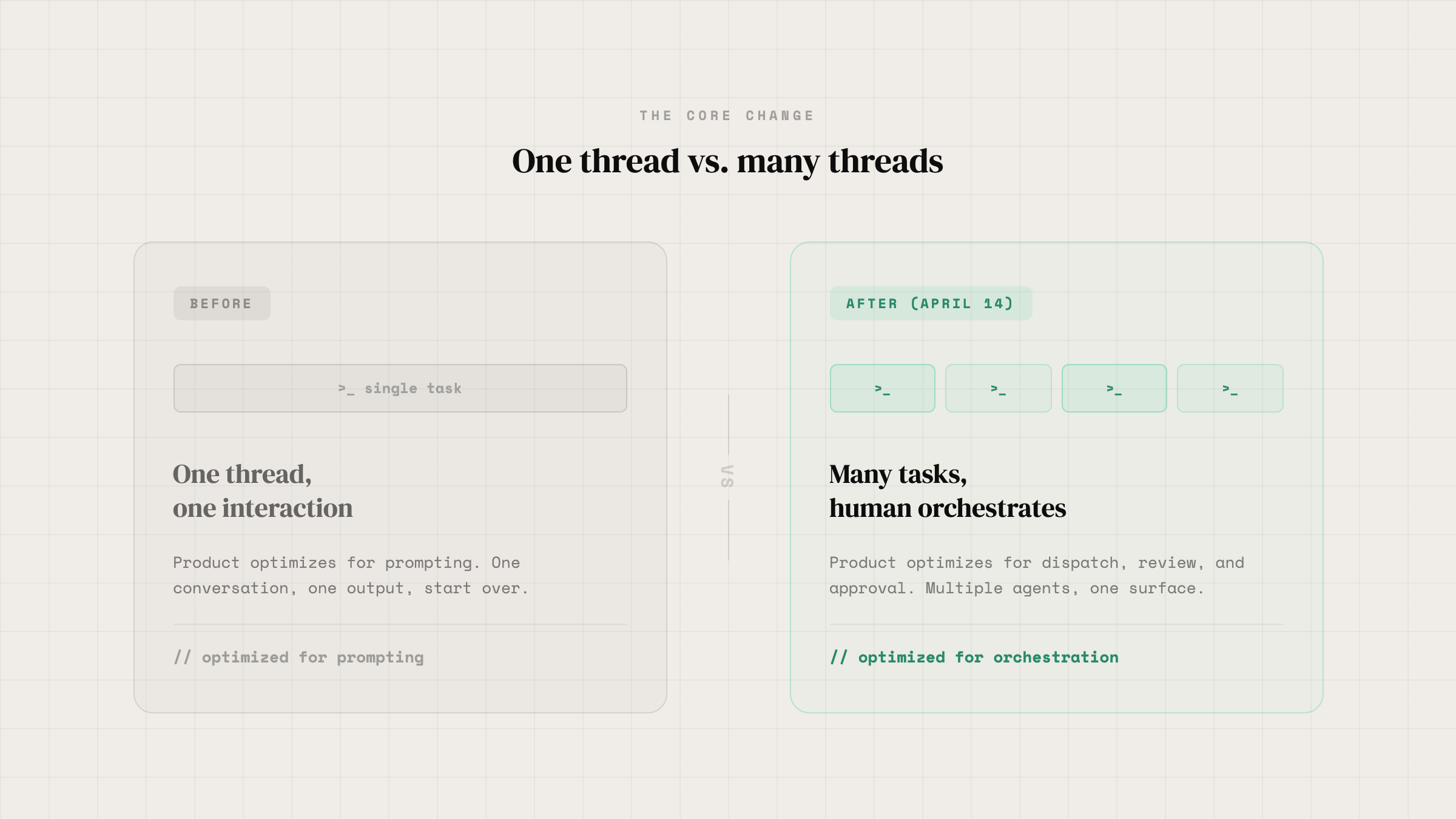
Look closer at the new Claude Code desktop app and the real change becomes obvious. Anthropic has rebuilt the product around a different assumption about how work happens. Claude Code is no longer organized around one thread, one task, one interaction. It is organized around many things happening at once, with the human sitting above them.
That is a much bigger claim than a design refresh.
What actually changed
The core change is simple.
Claude Code now supports parallel sessions as the center of the product. You can run multiple Claude tasks side by side, manage them from one sidebar, branch into side chat without polluting the main task, review large diffs, use an integrated terminal, make spot edits with an in-app file editor, preview apps and files, and move panes around like a control surface. The official framing from Anthropic is that agentic coding now involves “many things in flight” with the human in the orchestrator seat.
That sounds incremental until you think about what it changes downstream.
If a product assumes one thread, it optimizes for prompting. If a product assumes many threads, it optimizes for dispatch, review, and approval.
That is not a small product decision. That is a different model of work.
The most revealing detail
The most important thing about this redesign is not any single feature.
It is what sits at the center of the interface.
Anthropic did not make the editor more central. It made orchestration more central. Even though the product includes an in-app file editor for spot changes, the experience is not built around sitting in a code editor all day. The visual center of gravity is the task list, the diff, the preview, the terminal, and the review flow.
That matters because it tells you what Anthropic thinks comes next.
Not better autocomplete. Not a cleaner chat panel. Not an AI assistant sitting beside the IDE.
Their bet is that the interface for AI work should look more like a command center than a writing surface.
The second half of the launch is Routines
Anthropic also launched Routines on the same day.
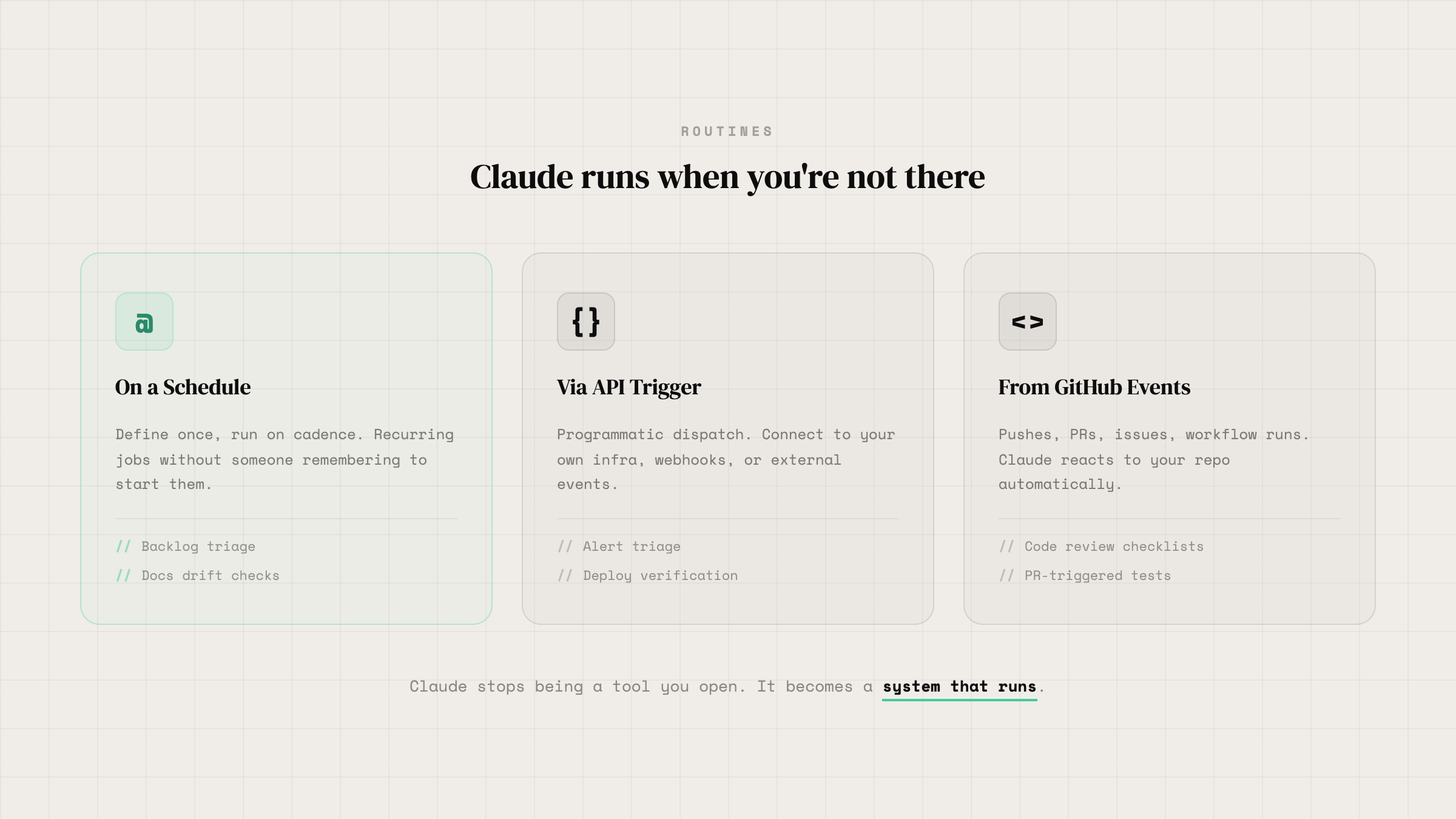
Routines let Claude run work automatically in three ways:
On a schedule
Via API trigger
From GitHub events: pushes, pull requests, issues, workflow runs
Anthropic’s own examples include backlog triage, docs drift checks, deploy verification, alert triage, and code review checklists — recurring jobs that no longer need someone to remember to start them.
That pushes the product one step further.
Claude stops being just a tool you open. It starts becoming a system that runs when you are not there.
The desktop redesign is the orchestration layer. Routines is the scheduling layer. Together they move Claude Code from “AI coding assistant” toward “always-on worker with human review.”
What Anthropic is actually betting on
This update is not really about new panes or nicer chrome.
It is about product philosophy.
Anthropic is betting that the IDE, at least in its old shape, is the wrong interface for the agent era.
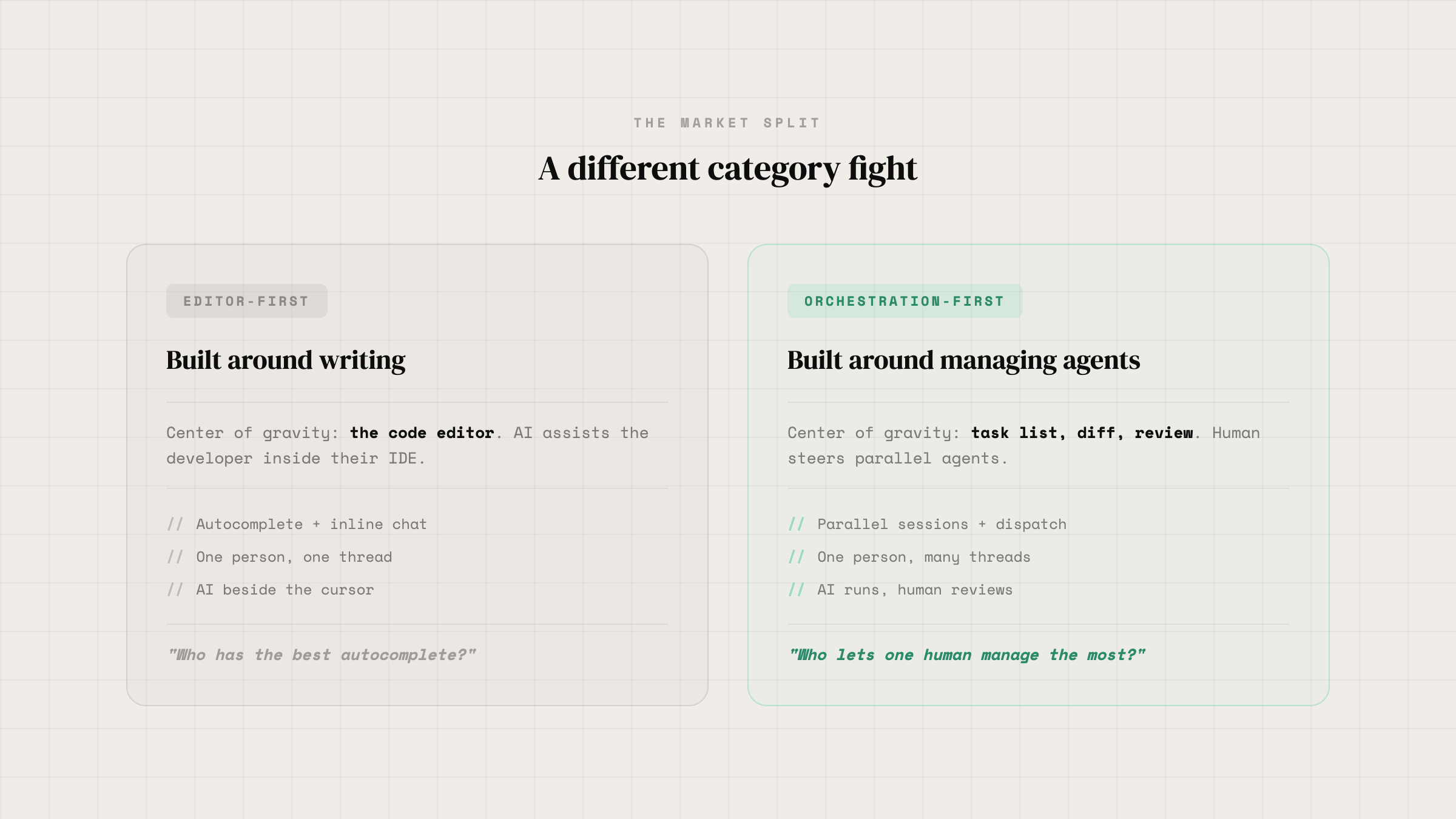
Traditional developer tools assume one person moving through one thread of work at a time. Claude Code now assumes multiple tasks running in parallel, isolated from one another, with a human reviewing outputs and steering the system. That creates a clean split in the market:
Editor-first tools are still built around writing. Orchestration-first tools are built around managing agents.
That changes the competition. The question stops being only who has the best model, the best autocomplete, or the cleanest editor plugin.
It becomes: who lets one human manage the most work at once? Who isolates that work cleanly? Who makes review fast enough that parallelism is actually usable?
That is a different category fight.
The case against this thesis
This is where coverage of this launch can get too excited. There is a strong case against overstating what this means.
First, Claude Code is still a developer product. Most non-technical users are not going to wake up tomorrow and start living inside a multi-pane desktop app with git worktrees, diff viewers, and GitHub-triggered routines.
Second, parallelism sounds powerful until the bill shows up. The skeptical coverage on launch day was not subtle. Both The Register and The New Stack flagged the same concern: more parallel sessions mean more token usage, more cost, and potentially more waste if outputs still require heavy review.
Third, not all work should be parallelized. Some jobs are tightly coupled. Some require one careful thread, not five half-supervised ones.
Fourth, the “editor is dead” framing goes too far. Anthropic itself included an in-app file editor in the redesign. The editor is not gone. It is demoted.
So the sober version of the argument is better than the hype version. Claude Code has not proven that the IDE is finished. It has shown that the IDE is no longer the only center of gravity.
That is still a significant claim.
The real takeaway
This launch matters because it makes Anthropic’s worldview visible.
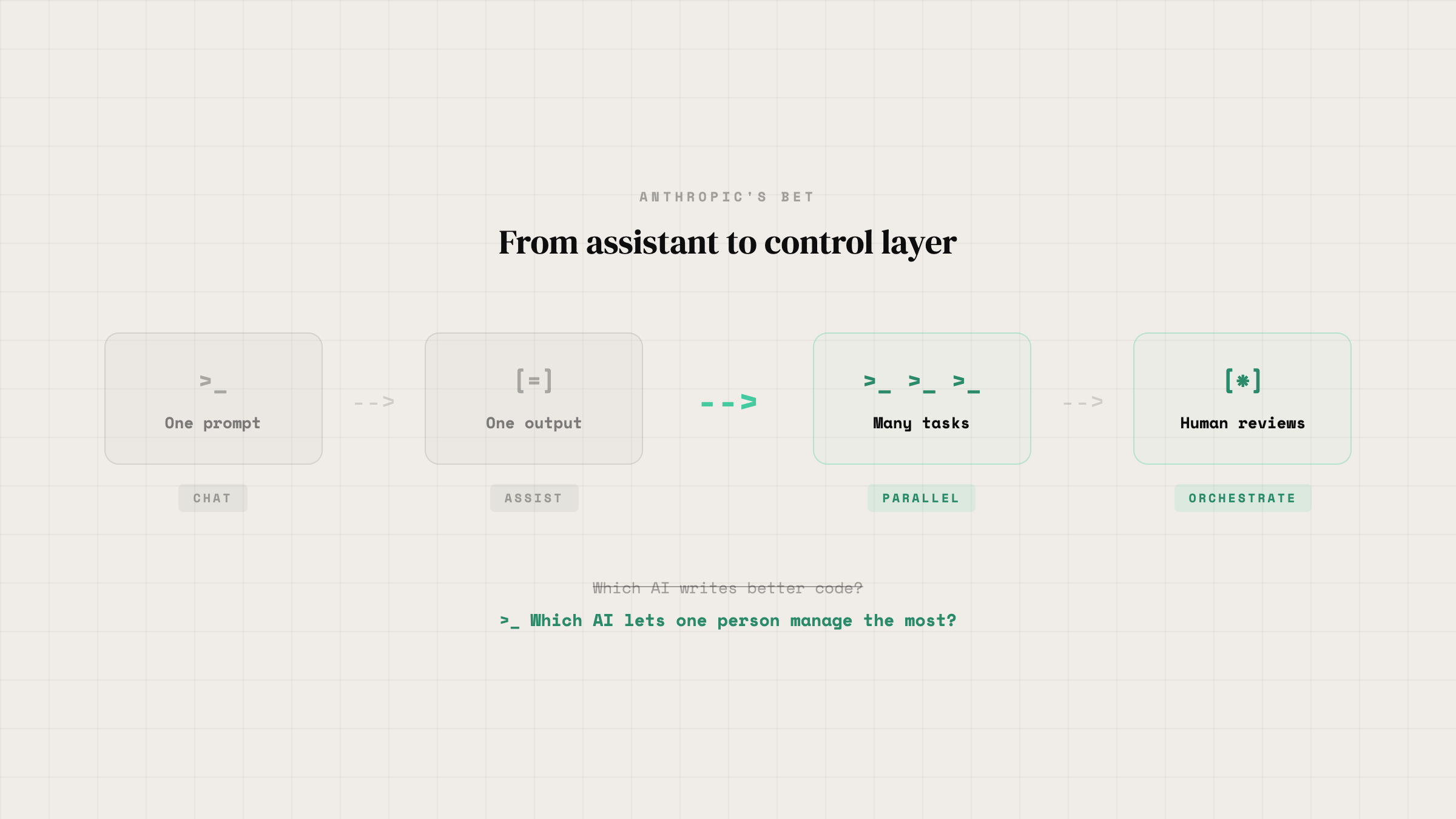
From one prompt, one output, one loop — to many tasks running in parallel, with a human reviewing and directing.
Claude Code is no longer trying to be only a better assistant for writing code. Anthropic is trying to turn it into a control layer for multiple agents. Maybe that becomes the dominant interface for AI work. Maybe it does not.
But April 14 was the clearest signal yet that one of the biggest labs in AI thinks the future looks less like a chat window and more like an orchestration surface.
The question is no longer which AI writes better code. It is which AI lets one person manage the most.
Reply and tell me, are you building with Claude Code, or are you still editor-first?
— Aj, @ thevibefounder